
Bench Cafeteria Tables

Attached benches seat students efficiently and make it easier to supervise groups together. Look for multiple points of entry and heavy‑duty locking casters for cleaning and reconfiguration.
Suggestions
Products
Checkout using your account
Checkout as a new customer
Creating an account has many benefits:
Lunch runs on timing, durability, and easy cleanup. The right cafeteria table plan keeps lines moving, seats students safely, speeds mopping between lunches, and converts the room for testing, assemblies, or after‑school events in minutes. This guide breaks down table types, essential features, smart layouts, and staff‑tested hacks to help your cafeteria operate smoothly—day after day.

Cafeteria tables carry a big workload: hundreds of students cycling through in tight windows, spills and crumbs that must be handled fast, and daily reconfigurations for cleaning or multipurpose use. High‑quality cafeteria tables are designed with cleanable laminates, locking casters for smooth maneuvering, and safety mechanisms that make folding and storage secure—features that keep your team efficient and students safer.
Capacity planning matters, too. Options range from mobile tables with benches or stools to chair‑compatible tops without attached seats—many with seating for up to 16 children depending on model and size.
Pick the format that fits your space and supervision needs. Shapes and seating types influence traffic flow, speed of seating, and how quickly your team can reset between lunches or events. Most options fold for storage and roll on locking casters to simplify cleaning.
Attached benches seat students efficiently and make it easier to supervise groups together. Look for multiple points of entry and heavy‑duty locking casters for cleaning and reconfiguration.

Individual stools help students get in and out quickly and support clear personal space—popular in upper grades. Many lines offer school‑color stool options.
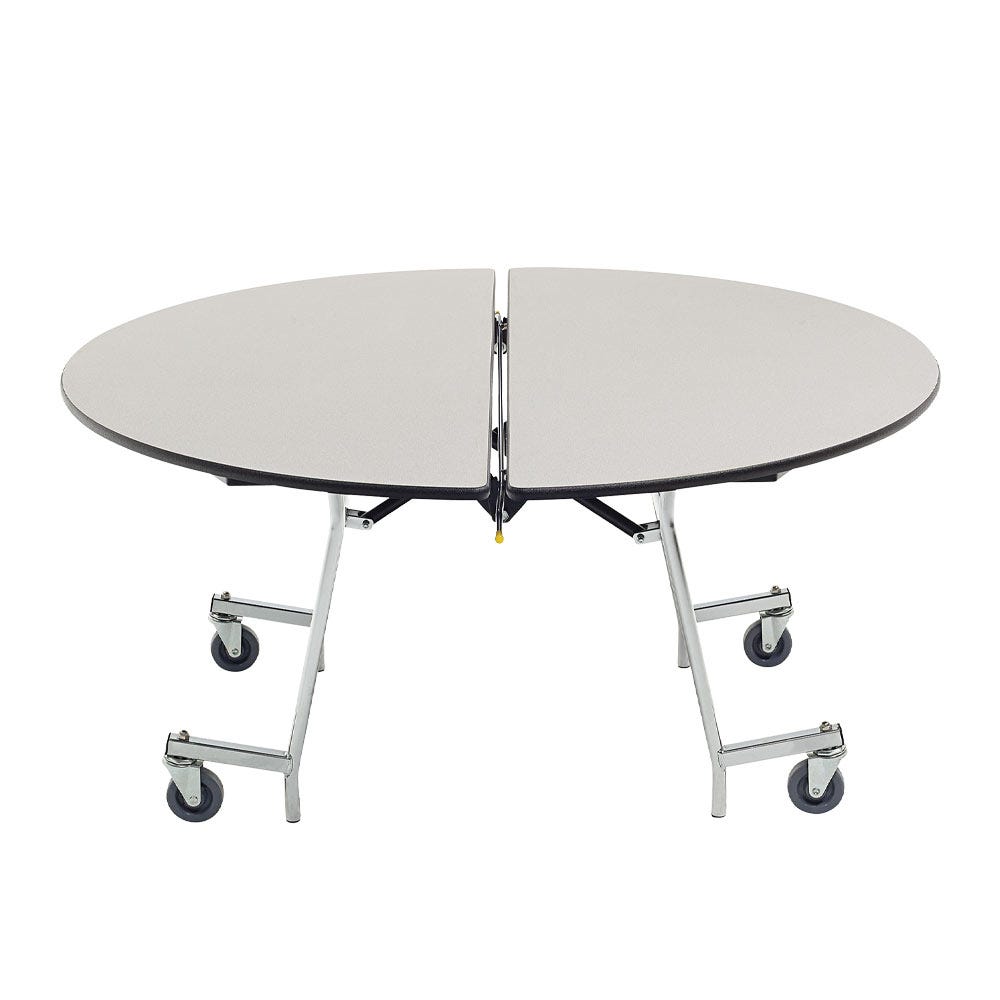
Pair with chairs for multipurpose rooms or hosting events. Mobile frames make transitions and floor access faster; lock casters during seating for safety.
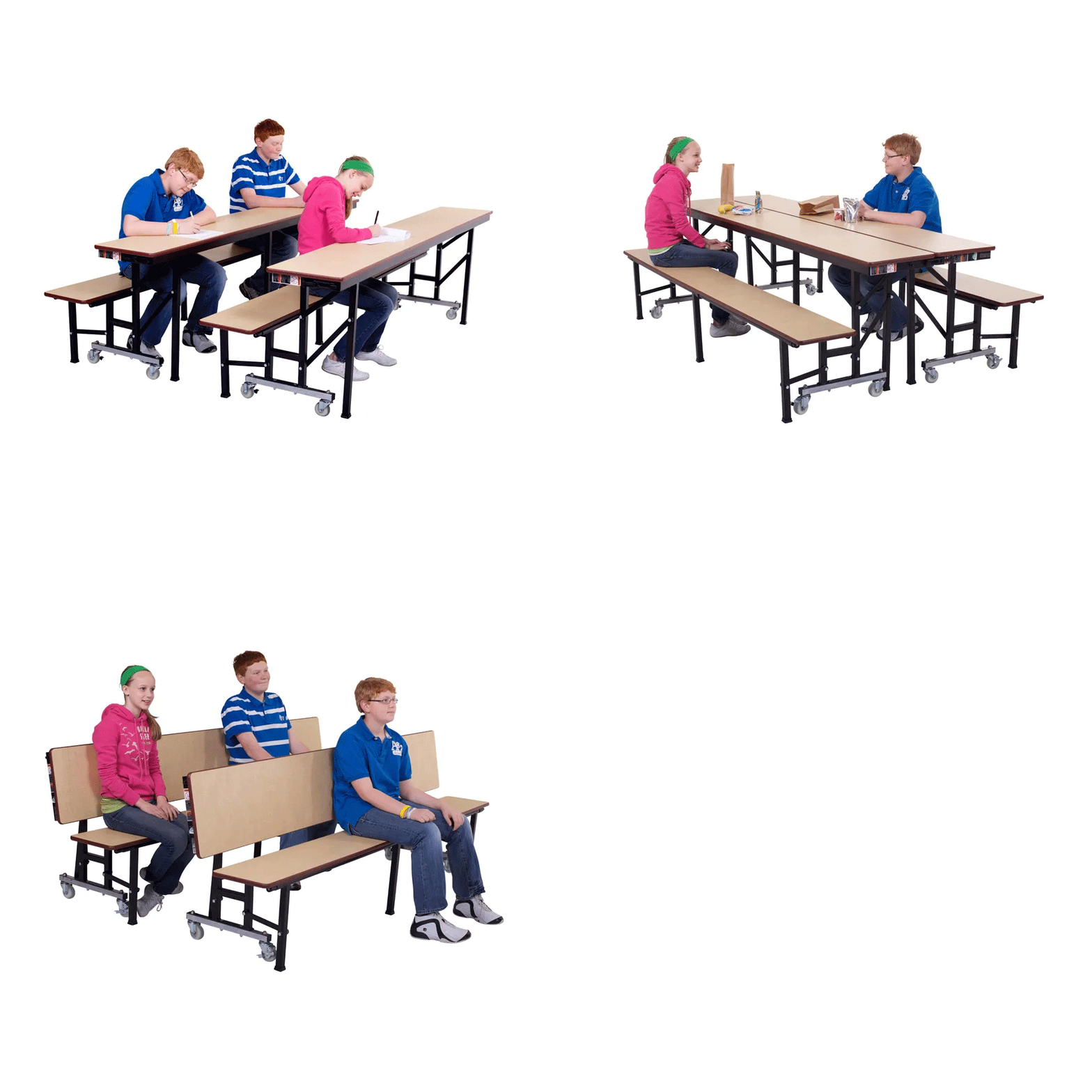
One unit that functions as a bench with a back or a single‑sided table. Pair two convertible units to forms a full cafeteria table. Ideal for multipurpose spaces where setups change frequently.

Great for student commons, cafés, and breakout spaces. Comfortable and colorful, typically easy‑clean vinyl or polyurethane; less versatile than mobile or convertible tables for large cafeteria resets.

Round and square tops create social nooks for smaller groups and staff areas. Consider stool heights, portability, and top finishes to match your traffic and cleaning routines.
Common shapes include rectangular, round, elliptical, and square; attached seating saves floor space vs. chairs. Plan heights around your students: ~29" tables with ~18" seats; ~27" tables with ~16" seats for younger grades.

These are practical moves from cafeterias that hum—easy to train, quick to repeat, and friendly to tight schedules and small crews.
Tape or floor decals guide traffic around table ends. Pair with “points of entry” on bench or stool tables so students slide in/out without snagging backpacks or bumping frames.
Lock casters, wipe top edges (watch those crumb‑catchers), unlock and roll aisles open for a quick broom/mop pass. Choose vinyl T‑molding or epoxy edges to make this faster.
Primary grades sit more securely at ~27" tables with ~16" seats; older students fit best at ~29"/~18". Label your table carts by height so substitutions are quick on event days.
Teach staff the fold‑sequence for your models (torsion bars, latches). Secure tables in storage position before moving to prevent tip risks and finger pinches.
Assign table colors to staff zones; stools often come in multiple colors which helps students and monitors spot their area fast.
If your cafeteria doubles as a gym or assembly hall, mobile tables without attached seats—or convertible bench tables—speed room flips and minimize storage footprints.
Bench tables, stool tables, mobile tables without attached seats, convertible bench tables, booth/cluster seating, and café‑style tables are the most common categories.
High‑pressure laminate tops for easy cleaning; vinyl T‑molding or epoxy edges to prevent food buildup; steel tube frames (lower gauge = stronger).
Depending on the model and size, many mobile cafeteria tables are designed to seat up to 16 children. Always verify the manufacturer’s spec sheet for your exact model.
Stool tables provide personal space and quick entry/exit; rectangular shapes maximize capacity. Consider ~29" table height with ~18" seat height and robust frames for daily loads.
Quickly compare seating style, best uses, and considerations to match your space, capacity goals, and cleaning routines.
| Type | Seating | Best For | Key Advantages | Considerations |
|---|---|---|---|---|
| Bench | Attached benches | Fast seating, younger grades, large groups | High capacity, easy supervision | Teach safe entry points |
| Stool | Attached stools | Upper grades, personal space | Quick in/out, color options | Lower shared capacity |
| No‑Seat Mobile Table | Use with chairs | Multipurpose rooms, events | Flexible chair layouts, easy floor access | Chairs add storage/handling |
| Convertible Bench | Bench/back, single‑sided, or paired | Tight storage, frequent reconfigurations | Multi‑use in one unit | Train staff on conversion steps |
| Booth/Cluster | Fixed or semi‑mobile | Commons, cafés, staff areas | Comfortable, noise‑softening options | Less flexible for big resets |
| Café‑Style | Stools/chairs | Small groups, social nooks | Inviting look, modular | Lower total capacity |
Ready to outfit your cafeteria? Explore our full range of cafeteria tables.
Shop Cafeteria Tables


We are an approved ClassWallet vendor and you may email sales@worthingtondirect.com for a quote or submit an online quote request to get your transaction started.