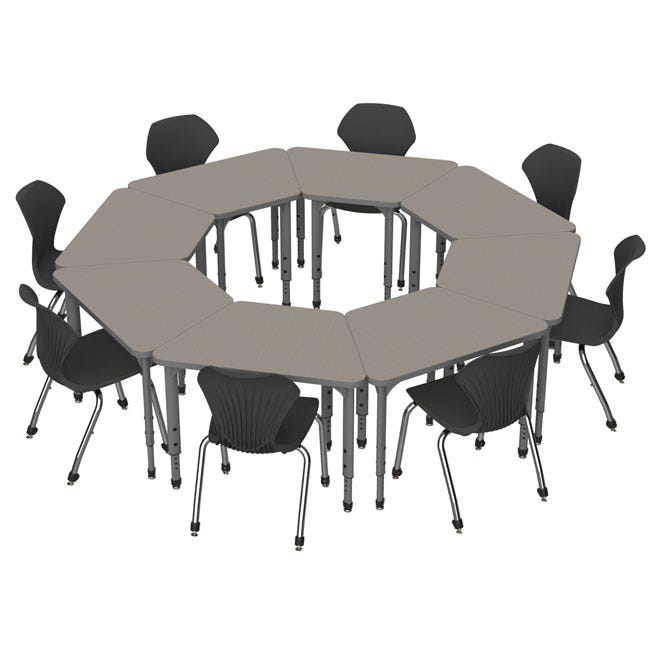
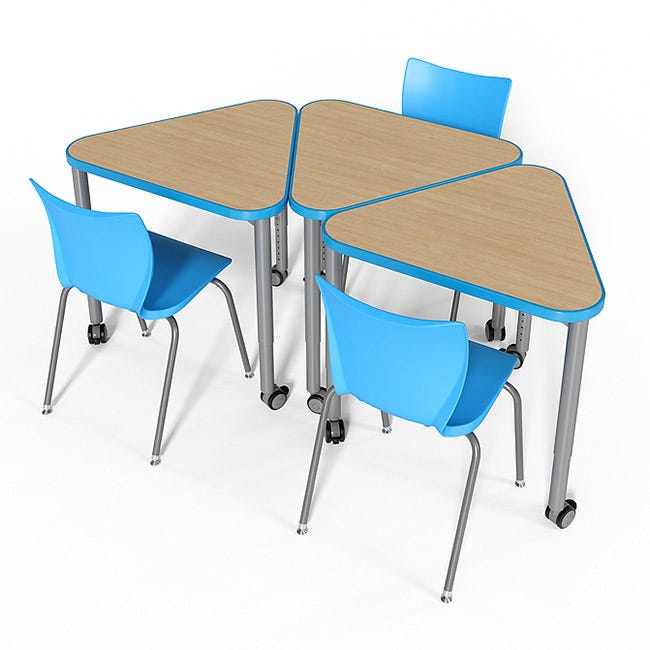
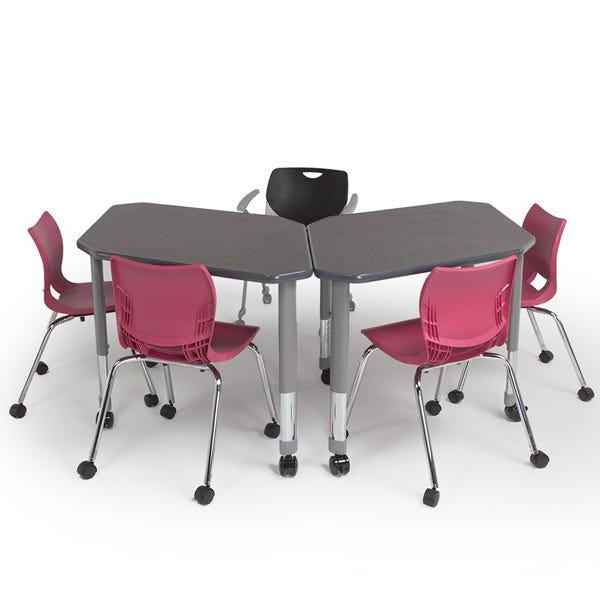
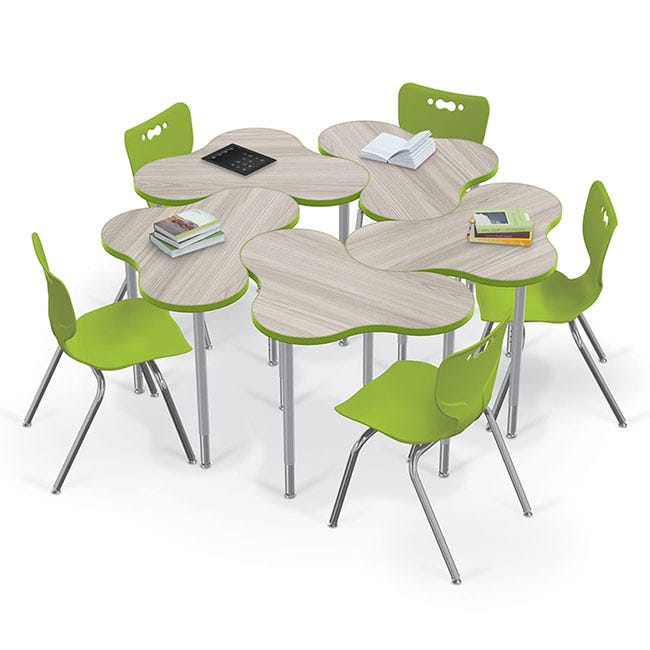
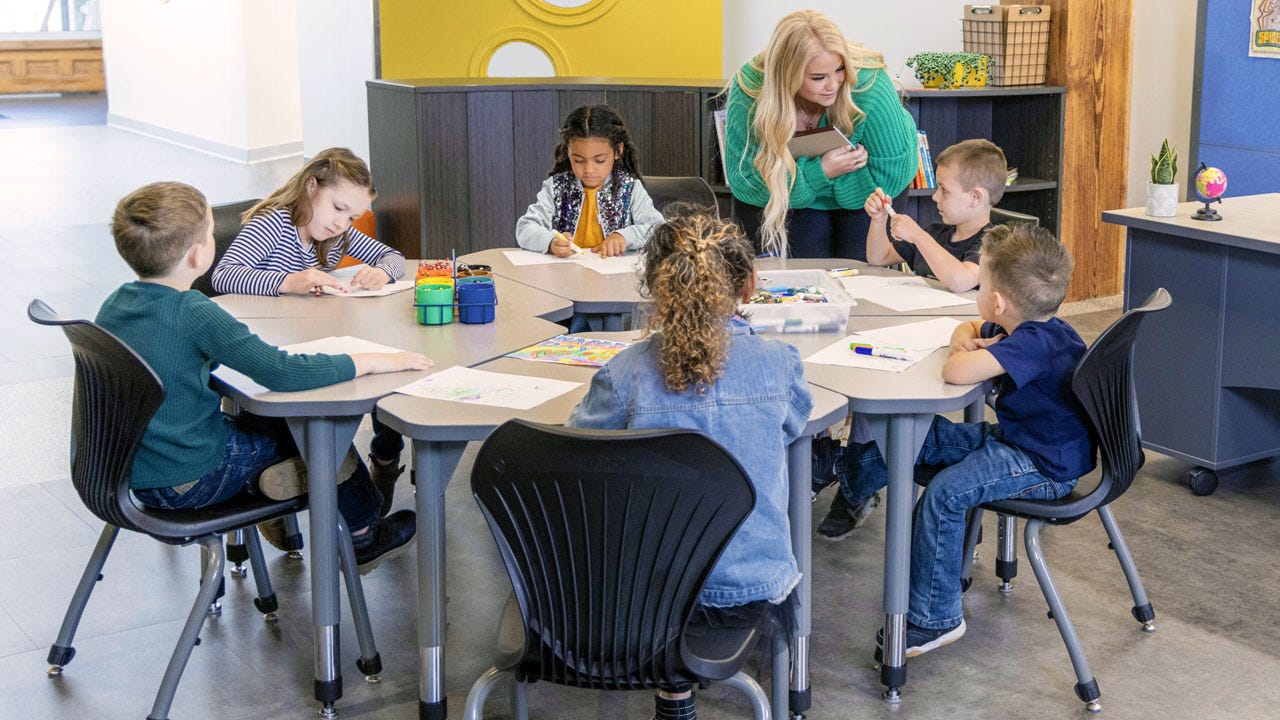
Collaborative desks come in shapes and bases that make grouping intuitive. Below are the most common options for K–12 and higher-ed classrooms, libraries, and STEM labs. Designed to group into pods, these desks can be configured into countless layouts—whether paired for partner work, grouped in fours or sixes for small teams, or expanded into eight-plus clusters for full-class collaboration. They’re ideal for project work, peer discussion, and Socratic seminars where clear sightlines and shared materials enhance engagement.
Mix and match across grades to standardize parts and simplify room turns.
A classroom classic, trapezoid and wedge shapes support a variety of cluster sizes without wasting corners. Great for quick “pair-share” and small-group rotations. Their clean geometry makes them easy to reconfigure in tight rooms or when mixing with other shapes.
Geometric options fit tight rooms and create strong central work zones. Hex and triangle pods keep every student engaged with equal access to shared materials and encourage teamwork in STEM and project-based environments.
Diamond-shaped desks allow creative multi-directional layouts that maximize visibility and interaction. Their angular design fits seamlessly into both small clusters and larger pod configurations, making them perfect for classrooms focused on project-based learning, STEM labs, and problem-solving activities.
Unique shapes like dogbone, wavy, and cloud designs add personality and flow to modern learning spaces. Educators choose these whimsical forms to soften the look of the classroom, inspire creativity, and make collaborative zones more inviting. Their playful outlines also help define themed corners, art centers, or reading nooks while maintaining ergonomic comfort.
Several trusted brands manufacture high-quality collaborative school desks, including
Smith System,
Marco Group,
Mooreco,
Paragon, and
Virco.
Each offers unique collaborative desk collections designed to support flexible, active learning environments across grade levels.