
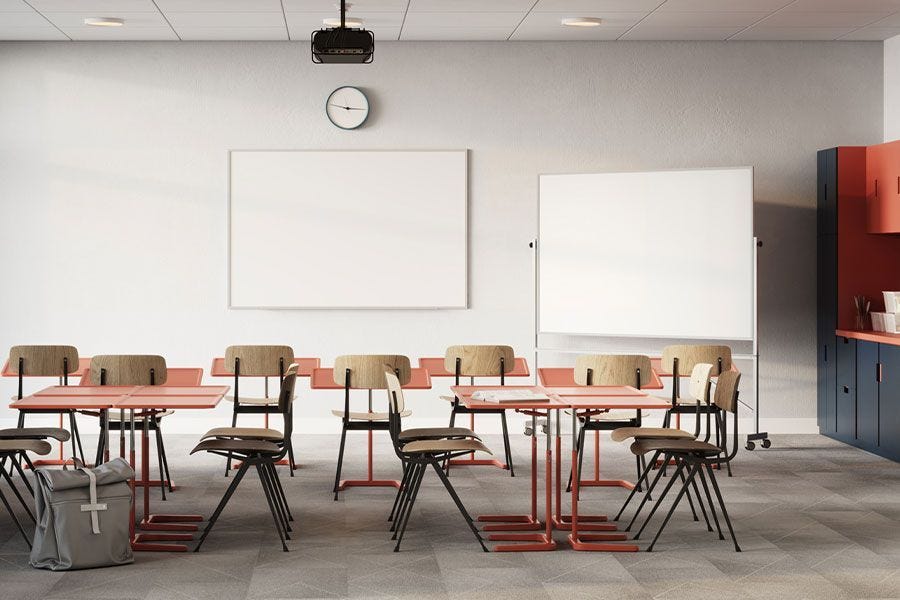
Whiteboards are some of the hardest-working surfaces in a classroom.
From math lessons and daily schedules to brainstorming sessions and student presentations, they see plenty of writing, erasing, and rewriting throughout the school day.
But what happens when yesterday's lesson refuses to disappear?
Faint marker shadows, stubborn smudges, and cloudy streaks can make even a frequently cleaned board look worn out. The good news? Knowing how to clean a whiteboard properly can help prevent buildup, reduce ghosting, and keep the writing surface ready for the next lesson.
Whether your classroom uses a traditional wall-mounted board, a magnetic whiteboard, or a modern glass surface, a little routine maintenance goes a long way.
Why Do Whiteboards Ghost?
Ever erased a whiteboard only to find a faint outline of the writing still visible? That's called ghosting.
Ghosting occurs when marker residue remains on the board after erasing. It can happen when ink sits on the surface too long, erasers become saturated with marker dust, or cleaning products leave behind residue.
The type of writing surface matters, too. Lower-cost melamine boards may develop staining and ghosting sooner than more durable porcelain steel or glass boards.
Before reaching for a stronger cleaner, it's worth checking two things: what type of whiteboard you have and whether your eraser is actually clean.

How to Clean a Whiteboard in 5 Easy Steps
For everyday classroom maintenance, you don't need an elaborate cleaning routine. Start with these simple steps, keeping your board manufacturer's care instructions in mind.
- Erase existing writing. Use a clean dry erase eraser or microfiber cloth to remove as much marker ink as possible.
- Check your eraser. If it is saturated with marker dust, clean or replace it before continuing.
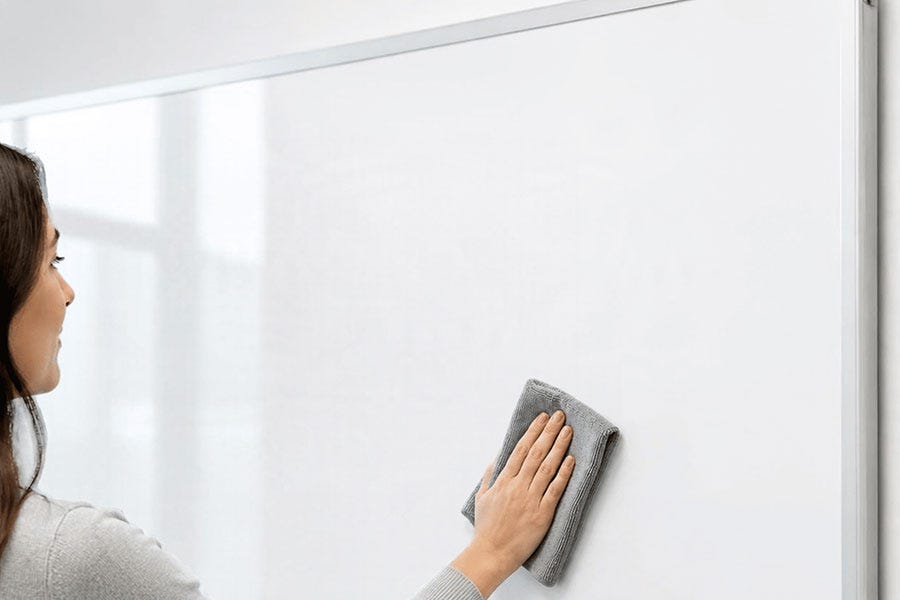
- Apply an approved cleaner. Lightly dampen a microfiber cloth with water or a manufacturer-approved whiteboard cleaner. Avoid spraying excessive liquid directly onto the board.
- Wipe gently. Clean the surface using light, even pressure, paying extra attention to areas with visible marker residue.
- Dry completely. Use a separate clean cloth to remove remaining moisture before writing again.
For many classrooms, erasing writing at the end of the day and giving the board a more thorough cleaning weekly is a good starting routine. Heavily used boards may need additional attention.
Teacher Tip: Keep two microfiber cloths nearby: one for cleaning and one for drying. This helps prevent leftover cleaner from creating new streaks.
Cleaning Tips for Different Whiteboard Surfaces
Not all whiteboards are made from the same materials. Understanding the differences can help you clean your dry erase board without damaging its finish.
Not sure which whiteboard surface is best for your classroom? Worthington Direct's Dry Erase Boards Buying Guide explains the differences between common board materials, helping schools compare durability, maintenance needs, and everyday performance before making a purchase.
Melamine Whiteboards
Melamine is commonly used in budget-friendly whiteboards. These surfaces can be more susceptible to staining and ghosting, especially with frequent use.
Use a soft microfiber cloth and a mild cleaner approved for the surface. Avoid abrasive cleaning tools and excessive moisture. Erasing writing promptly is especially helpful for maintaining melamine boards.
Painted Steel Whiteboards
Painted steel boards are often magnetic and commonly found in classrooms and shared learning spaces.
Regular cleaning with a soft cloth and an approved dry erase cleaner helps remove ink residue. Avoid harsh solvents or aggressive scrubbing that could damage the painted writing surface.
Porcelain Steel Whiteboards
Porcelain steel whiteboards are designed for durability and heavy daily use. Their hard, nonporous writing surfaces generally offer better resistance to staining, scratching, and ghosting than melamine boards.
Everyday maintenance is usually straightforward: erase with a clean eraser, remove residue with an approved cleaner when needed, and dry the surface before writing again.
Glass Whiteboards
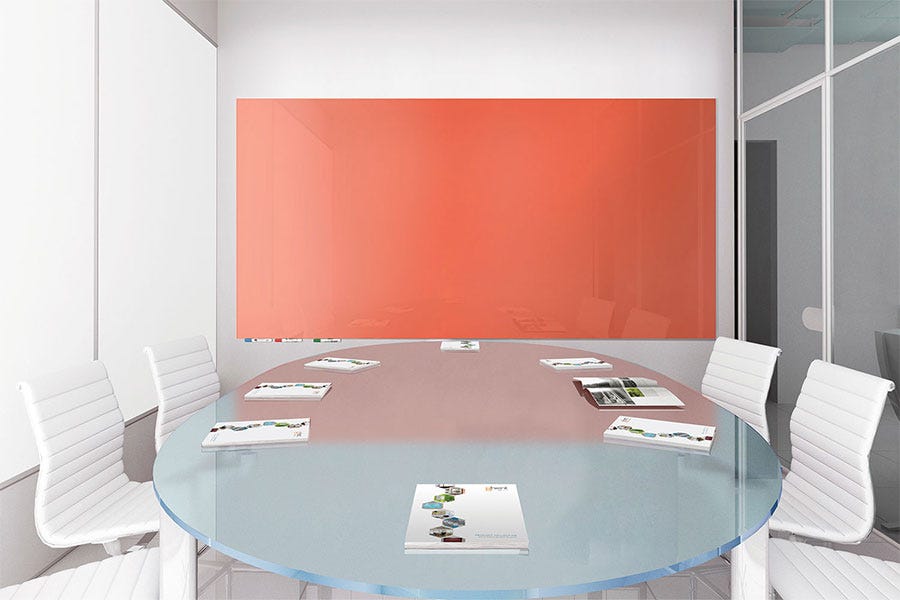
Glass dry erase boards feature a smooth, nonporous surface that is highly resistant to staining and ghosting.
Clean them with a microfiber cloth and a glass cleaner or board cleaner approved by the manufacturer. Dry thoroughly to prevent streaks and keep the writing surface clear.
Need more detailed care instructions? Visit Worthington Direct's How to Clean and Maintain Dry Erase Surfaces guide for additional recommendations, including care for writable desks, tables, and other dry erase furniture.
How to Remove Stubborn Whiteboard Ghosting
If a board still shows faint writing after ordinary cleaning, don't assume it needs to be replaced.
Start by wiping the affected area with a clean microfiber cloth and a non-abrasive whiteboard cleaner approved for the surface.
If the manufacturer's instructions permit it, a small amount of 70% isopropyl alcohol applied to a microfiber cloth may help remove stubborn marker residue. Never pour alcohol directly onto the board, and use extra caution with melamine, laminate, or older surfaces.
After cleaning, wipe away any remaining residue as directed and dry the surface completely.
If ghosting remains, the writing surface itself may be worn or damaged, particularly on older melamine boards.
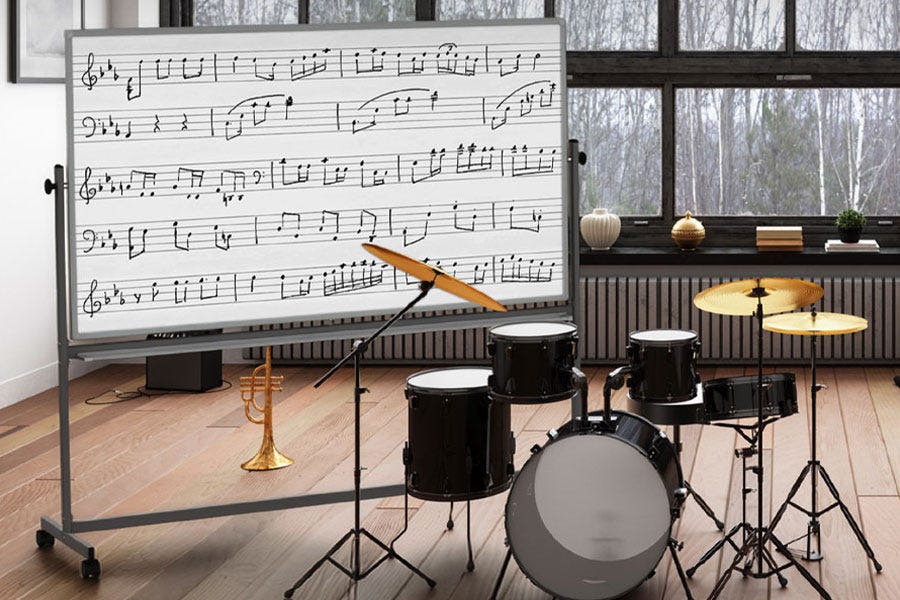
Specialty graphic surface dry erase boards, including music staff and gridline whiteboards, also benefit from proper cleaning and maintenance. Follow the manufacturer's care instructions to help protect the writing surface and printed graphics.
What Should You Never Use to Clean a Whiteboard?
Some cleaning shortcuts can do more harm than good.
Avoid the following unless the board manufacturer specifically approves their use:
- Abrasive sponges or scouring pads: These can scratch or damage the writing surface.
- Harsh solvents: Strong chemicals may damage certain whiteboard finishes.
- Waxes, oils, or furniture polish: These can leave a film that interferes with writing and erasing.
- Dirty erasers: Saturated erasers can spread old marker residue across the board.
- Excessive water or cleaning solution: Liquid can collect around frames, seams, and edges.
The safest approach is usually the simplest: use appropriate markers, clean microfiber cloths, and cleaning products recommended for your particular board.
When Is It Time to Replace Your Whiteboard?
Sometimes the problem isn't how you're cleaning the board. It's the condition of the surface itself.
A whiteboard may be ready for replacement when:
- Ghosting remains even after proper cleaning.
- Marker ink becomes increasingly difficult to erase.
- The surface has noticeable scratches, chips, peeling, or other damage.
- Stains interfere with writing visibility.
- The board no longer meets the demands of daily classroom use.
Before replacing a board, confirm that dirty erasers or cleaning-product buildup are not causing the problem.
In some cases, replacing the entire board may not be necessary. Dry erase resurfacing panels and markerboard skins can provide a fresh writing surface over certain existing boards, offering another option for classrooms with worn or stained whiteboards.
For classrooms where the board is used constantly, selecting a more durable surface can be a worthwhile long-term consideration.
Tired of Ghosting? Consider Porcelain Whiteboards
If you're replacing a heavily used classroom board, porcelain steel is worth a closer look.
Porcelain steel whiteboards offer exceptional resistance to ghosting, staining, and scratching. Their durable writing surfaces make them particularly well suited for classrooms, lecture spaces, and shared instructional areas where boards are used throughout the day.
Many porcelain steel boards also feature magnetic surfaces, allowing educators to display teaching materials alongside handwritten notes and diagrams.
Explore Worthington Direct's selection of magnetic whiteboards to compare options for your school.
Whiteboard Cleaning FAQs
How often should you clean a whiteboard?
For frequently used classroom boards, erase writing at the end of each day and clean more thoroughly about once a week. Adjust the schedule based on how heavily the board is used and the manufacturer's recommendations.
Can you use water to clean a dry erase board?
A microfiber cloth lightly dampened with water can help remove everyday residue from many dry erase surfaces. Avoid soaking the board, and always check the manufacturer's care instructions.
Can permanent marker be removed from a whiteboard?
Sometimes. One commonly used approach is to write over the permanent marker with a fresh dry erase marker, wait a few seconds, and wipe both away. Always confirm that this technique is appropriate for your specific board before trying it.
Does ghosting mean a whiteboard is permanently damaged?
Not necessarily. Ghosting can result from marker buildup, old eraser dust, or cleaning residue. If proper cleaning doesn't restore the surface, however, permanent staining or wear may be the cause.
Keep Your Whiteboard Ready for the Next Lesson
A clean whiteboard makes it easier for teachers to present information clearly and for students to follow along, contribute ideas, and participate in classroom activities.
Learning how to clean your whiteboard doesn't have to be complicated. Consistent erasing, clean supplies, appropriate cleaning products, and an understanding of your board's surface material can make a noticeable difference.
And when an older whiteboard has reached the end of its useful life, choosing a durable replacement can help keep lessons running smoothly for years to come.
Explore Worthington Direct's dry erase boards and whiteboards for classrooms, libraries, offices, and collaborative learning spaces.


