
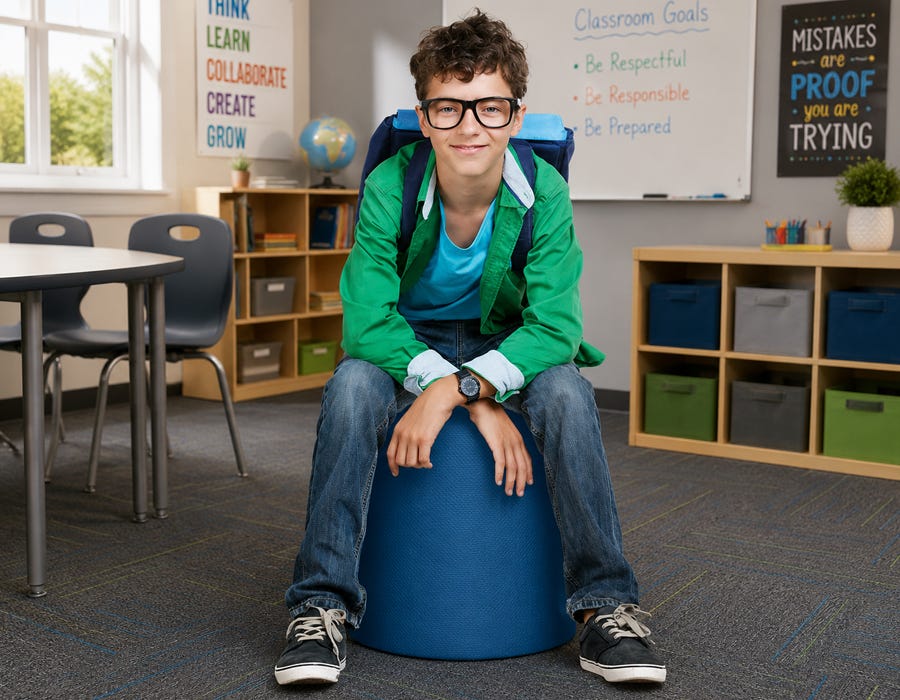
Flexible Seating
Wobble stools, rockers, floor seating, and mobile chairs give students alternatives to traditional seating while supporting comfort, movement, and choice.
Suggestions
Products
Checkout using your account
Checkout as a new customer
Creating an account has many benefits:

Student engagement begins with creating learning environments that help students feel comfortable, connected, and ready to participate. Thoughtful furniture choices can support movement, collaboration, concentration, creativity, and a variety of teaching methods throughout the school day.
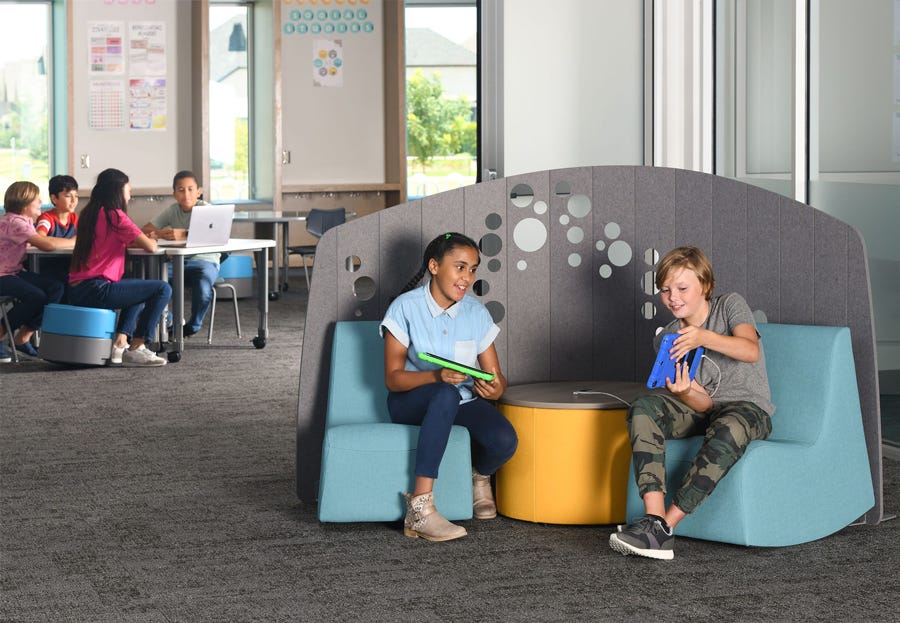
Comfortable classrooms can help students settle into an activity, interact with classmates, and feel more connected to their learning environment.
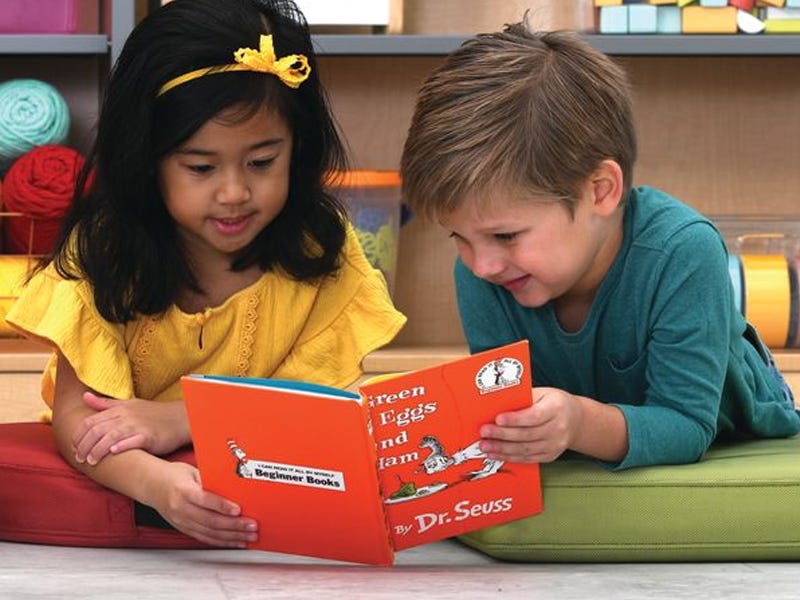
Adding classroom soft seating such as sofas, ottomans, poufs, benches, and lounge chairs can make a classroom feel more welcoming. These options give students different ways to sit, stretch out, read, communicate, and work with their peers.
Comfortable seating areas also provide a less formal setting for one-on-one conversations, reading conferences, tutoring, and small-group instruction. Teachers can sit beside students rather than across from them, helping discussions feel more personal and approachable.
Soft seating is commonly placed in classroom corners, along the back of the room, or near bookshelves to create defined reading and concentration stations. It can also be used in media centers, commons areas, and school libraries where students need spaces for both independent study and informal collaboration.
Students do not all focus or participate in the same way. Offering different seating and workspace options can help more learners find a position that supports the task at hand.
Wobble stools, rockers, floor seating, and mobile chairs give students alternatives to traditional seating while supporting comfort, movement, and choice.
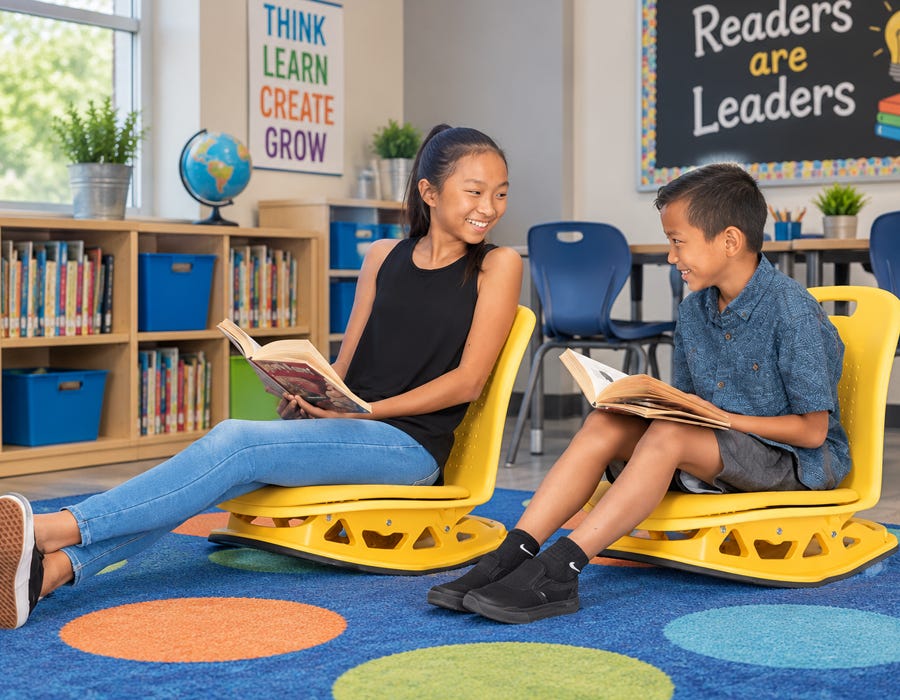
Movement-based seating can provide an appropriate outlet for motion while students read, listen, discuss, or complete independent assignments.
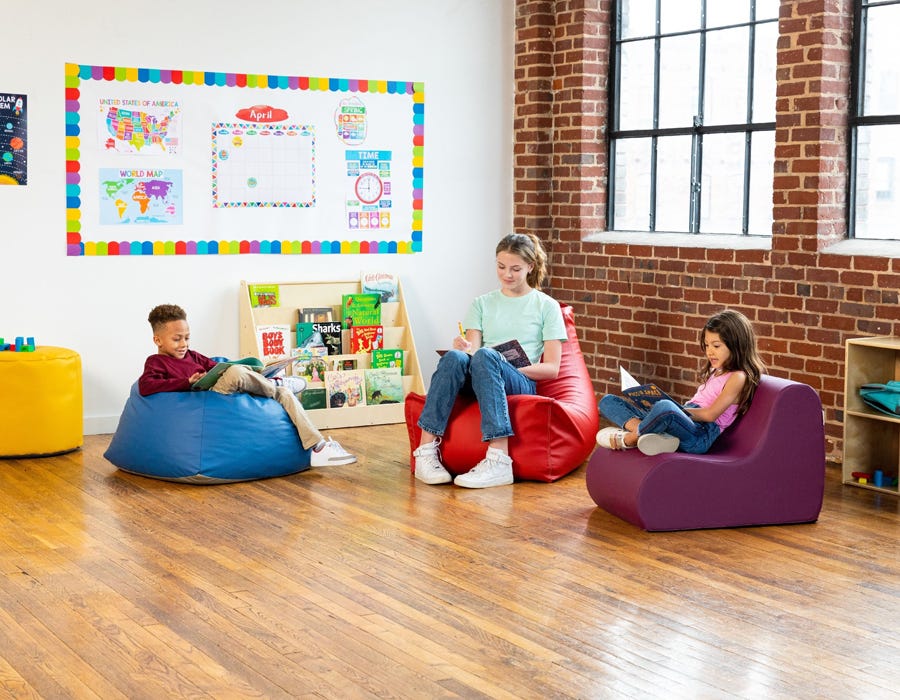
Lounge seating creates welcoming places for reading, conversation, quiet work, and informal meetings between students and educators.
Furniture placement can influence how easily students communicate, share materials, and transition between independent and group activities.
Traditional rows may be useful for certain lessons, but they are not the only way to organize a classroom. Clusters, pods, U-shaped arrangements, and paired workstations make it easier for students to discuss ideas and solve problems together.
Different shapes of collaborative student desks can be arranged for partner work, small groups, class discussions, or individual assignments. Mobile desks and tables make it easier for educators to change the arrangement without interrupting the flow of the lesson.
A coordinated mix of desks, tables, chairs, mobile boards, and collaborative furniture can help students move naturally between listening, writing, brainstorming, and presenting.
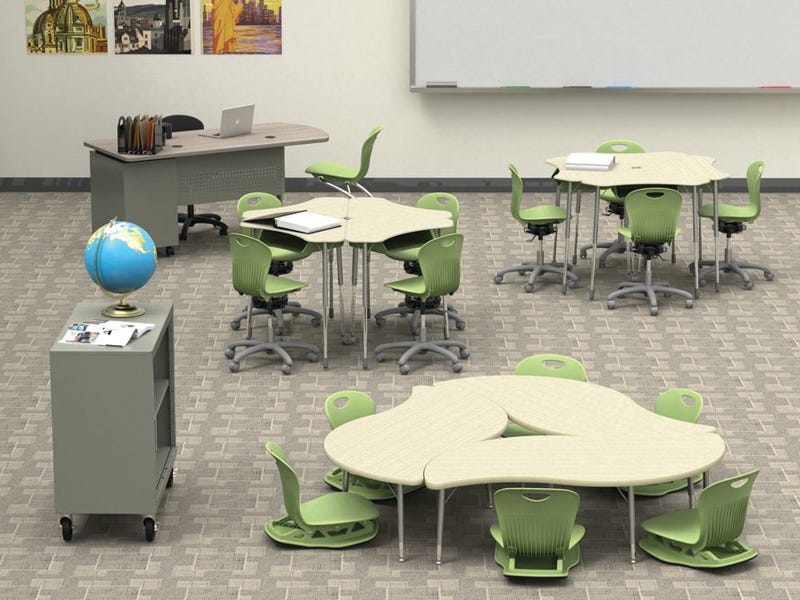
Defining areas for different activities can make a classroom easier to navigate while giving students clear choices about where and how to work.
Use soft seating, rugs, book storage, and small tables to create an inviting area for reading, reflection, tutoring, or independent assignments.
Group tables, mobile desks, and shared markerboards give students room to exchange ideas, organize materials, and complete projects together.
Maintain a clear area where students can see the educator, presentation display, or interactive board without rearranging the entire classroom.
Durable work surfaces, accessible storage, and mobile carts help students build, experiment, create, and clean up efficiently.
Students often become more invested when they can create, test ideas, solve real problems, and see the results of their work.
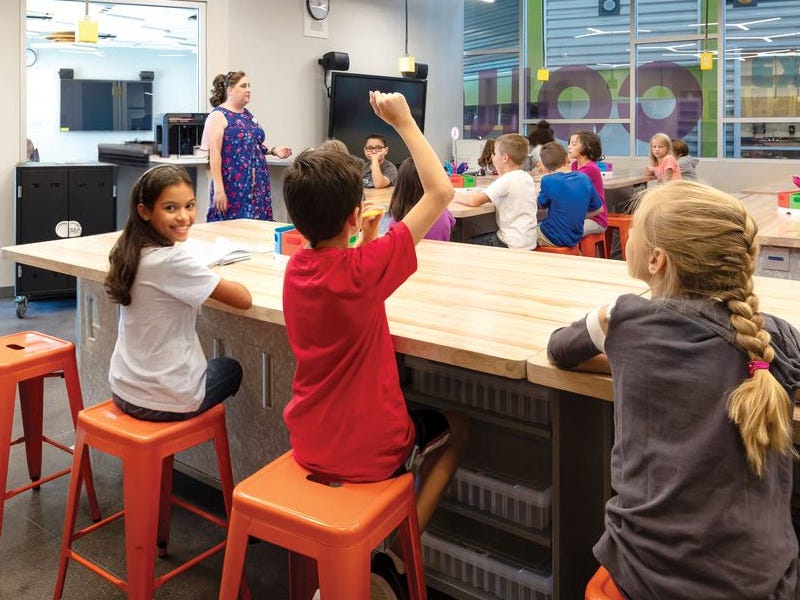
Makerspaces give students opportunities to design, build, experiment, and revise. These active learning environments can support robotics, coding, engineering, art, fabrication, and career and technical education projects.
The right makerspace furniture provides durable work surfaces, accessible tool storage, power options, and room for students to work together. Mobile storage and adaptable tables also make it easier to adjust the space as projects and class sizes change.
Schools can begin with a small project station or expand into a full makerspace using makerspace table and seating packages that help coordinate workstations and seating.
A classroom may need to support presentations, group projects, testing, independent work, and hands-on learning during the same day.
Improving student engagement does not always require renovating the entire classroom. Mobile tables, modular seating, portable storage, and lightweight desks can change how a room functions without changing walls or flooring.
Begin by identifying one challenge. A classroom may need a better small-group area, more flexible seating, improved storage, or a comfortable place for students to read. Testing one new zone allows educators to see how students use the space before making larger changes.
For larger projects, Worthington Direct’s classroom design services can help with space planning, furniture selection, line drawings, and 3D renderings.
The most effective classroom layout is one that supports students, educators, daily routines, and the activities that happen most often.
Provide several appropriate places to work without making the environment difficult to manage.
Students should be able to see the educator, presentation area, and instructional displays from primary work zones.
Leave room for students and educators to move safely between desks, tables, storage, and classroom exits.
Choose commercial-grade upholstery, surfaces, edges, frames, and casters suited for daily classroom use.
Place commonly used materials where students can retrieve and return them without interrupting instruction.
Mobile and modular furniture makes it easier to transition between individual, partner, group, and whole-class activities.
Consider the way students learn, move, communicate, and transition between activities when planning an engaging classroom.
Furniture can support engagement by giving students comfortable places to focus, collaborate, move, read, build, and participate in different types of instruction.
A balanced classroom may include traditional chairs, flexible seating, active stools, lounge seating, floor seating, and chairs that can be moved easily between activities.
No. Soft seating is one option for creating a comfortable reading, tutoring, or collaborative zone. The right furniture mix depends on available space, student age, instructional goals, and classroom routines.
Begin with one area or one furniture type. Add a small reading zone, introduce a few flexible seating options, place desks into collaborative groups, or add mobile storage before changing the entire classroom.
Collaborative desks can be arranged in pairs, small pods, rows, circles, or larger groupings. The best arrangement depends on the lesson, class size, sightlines, and the amount of individual workspace students need.
Yes. Makerspace tables, workbenches, mobile storage, and utility carts can support classroom projects, art activities, STEM lessons, collaborative work, and material organization.
From flexible seating and collaborative desks to makerspace workstations and library furniture, Worthington Direct can help you create learning environments that support comfort, movement, creativity, and connection.


We are an approved ClassWallet vendor and you may email sales@worthingtondirect.com for a quote or submit an online quote request to get your transaction started.