Save time and stay on budget when you bundle

Shop Furniture Packages

Classroom Learning Rugs for K–5: 7 Smart Ways to Teach With Rugs

Colorful K–5 classroom rugs and carpets arranged to create learning stations and group seating areas.
January 23, 2026
Classroom Learning Rugs for K–5: 7 Smart Ways to Teach With Rugs

Classroom rugs aren’t just something to “warm up the room.” In K–5 spaces, the right rug can become a daily teaching tool—helping students learn routines, stay organized during transitions, and practice skills during circle time, small groups, and independent work. Whether you’re setting up a classroom library, planning station rotations, or looking for a simple way to reinforce early literacy and math concepts, a well-chosen learning rug can do a lot of heavy lifting—without adding more to your prep. Below are seven smart, teacher-friendly ways to use classroom rugs as part of instruction (not just décor), plus what to look for when selecting one for your space.

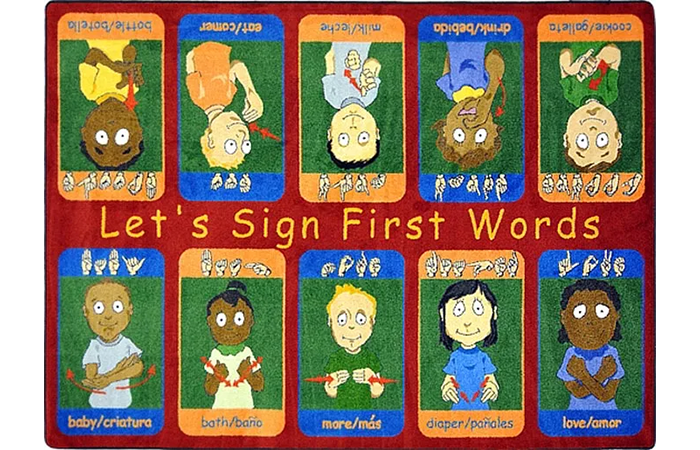
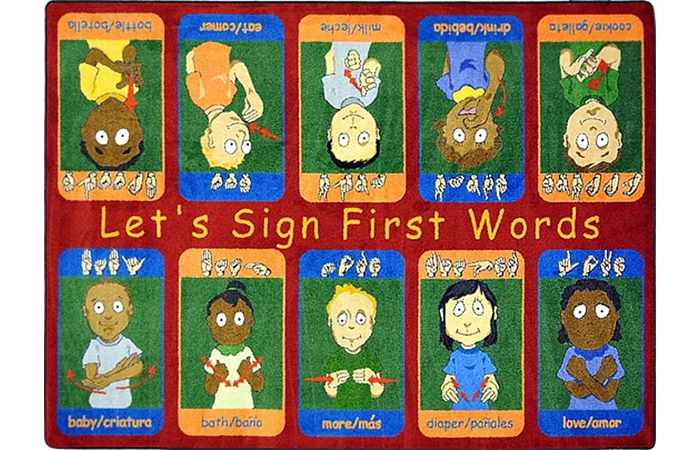
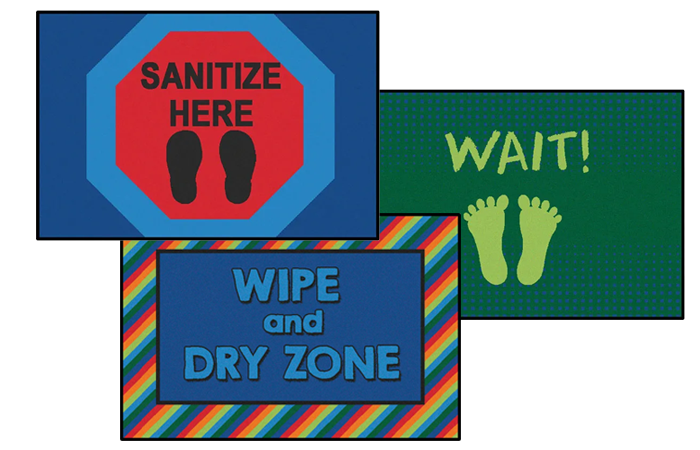
Many classroom learning rugs also teach through their design. You’ll find rugs that reinforce geography (maps, continents, cardinal directions), letters and numerals (alphabet arcs, number lines, 100 charts), shapes and colors, and even music notes (staff lines, note names, rhythm icons). Some are bilingual—a helpful way to support vocabulary development, classroom labels, and language learners with consistent visual cues. You can also use activity rugs (hop paths, movement prompts, game-style grids) to turn practice into quick, structured learning during centers or transitions. And smaller “directional” rugs can be placed at stations—like handwashing/sanitizing areas, entry points, supply zones, or “wait here” spots—so students get visual reminders for both routines and academic skills throughout the day.

Quick “What to Look For” Checklist (before you buy)

When you’re selecting rugs that will hold up to daily instruction, prioritize:

  • Low-emission materials (look for certifications like CRI Green Label Plus when possible for indoor air quality).
  • Safety + code considerations (many education rugs reference Class I fire testing/ratings—check your district’s requirements).
  • Accessibility-friendly edges + surfaces (stable, slip-resistant rugs help reduce trip risks and support movement for all learners).
  • Cleanability (choose rugs that can be vacuumed regularly and spot-cleaned as needed).
  • Clear “teaching zones” (patterns that create defined seating spots, gridlines, letters, shapes, or pathways make routines easier to teach and maintain).

1) Create a predictable gathering place for meetings, read-alouds, and mini-lessons

A large “community rug” helps students transition quickly: they know where to sit, how to face the teacher, and what “ready to learn” looks like. For younger grades, rugs with defined seating spaces (dots, squares, shapes) reduce crowding and give students an immediate visual boundary.

Teacher tip: Assign seats by shape/color (or by “home spot”) to speed up transitions and reduce disputes.

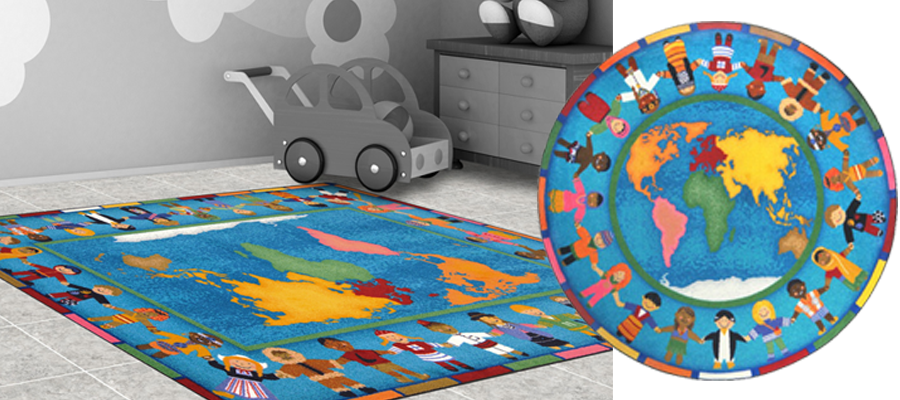
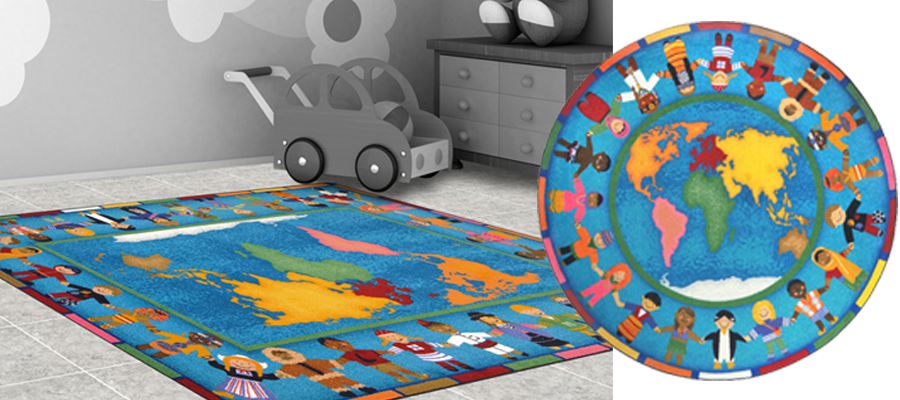
Hands Around the World classroom rug with individual seating spots for morning meeting.Hands Around the World classroom rug with individual seating spots for morning meeting.

2) Make small-group instruction smoother with a dedicated group-work rug

Small-group rugs instantly communicate: “This is a teamwork zone.” A round rug for 4–6 students can reduce wandering and help you run reading groups, math rotations, or intervention without constantly resetting expectations.

Teacher tip: Keep a small bin nearby with dry-erase boards, manipulatives, or whisper phones—your rug becomes a complete station.

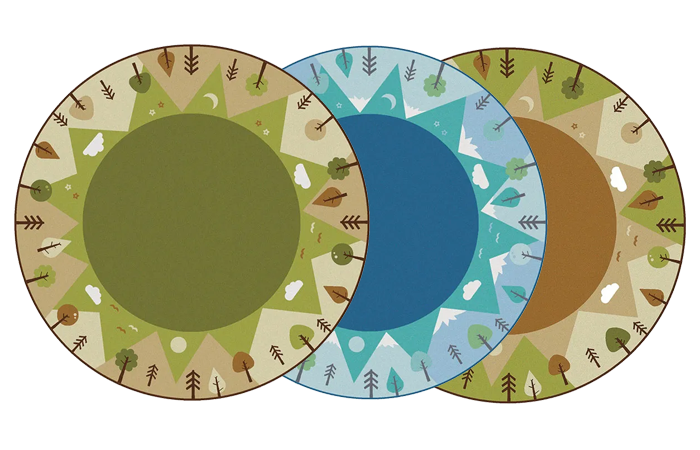
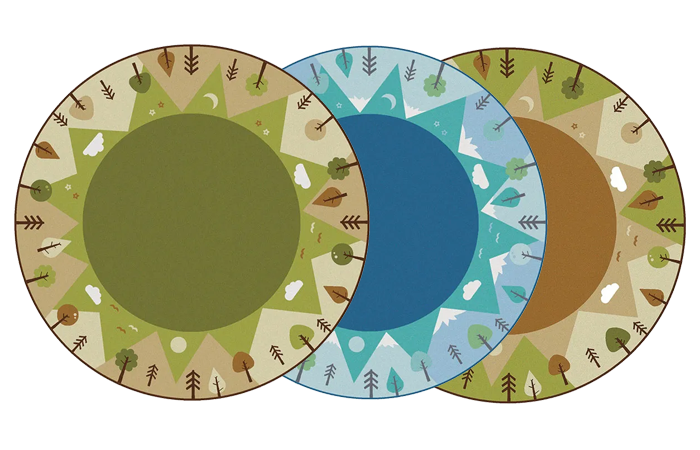
Round small-group learning rug used for reading groups in a K–2 classroomRound small-group learning rug used for reading groups in a K–2 classroom

3) Use rugs as visual learning tools (literacy, math, routines, SEL)

Many K–5 rugs embed concepts directly into the design—making them “always-on” teaching anchors for quick practice and review.

Ideas teachers use daily:

  • Literacy: letter-sound practice, phonics routines, sight-word games
  • Math: number talks on a grid, skip counting, shapes, coordinate basics
  • SEL + routines: feelings check-ins, calming corners, “wait here / line up here” cues
Directional classroom rugs labeled ‘sanitize here’ to support student independence.Directional classroom rugs labeled ‘sanitize here’ to support student independence.

4) Support independence with personal workspaces

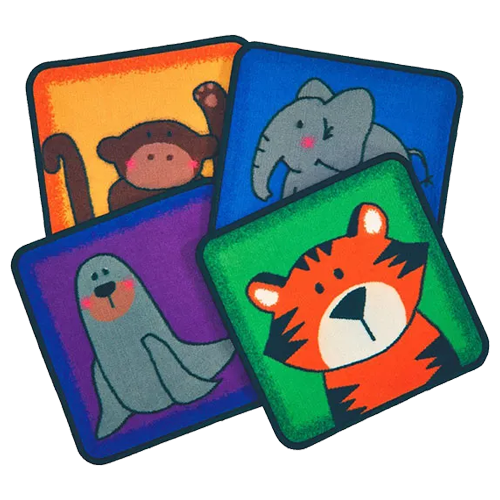
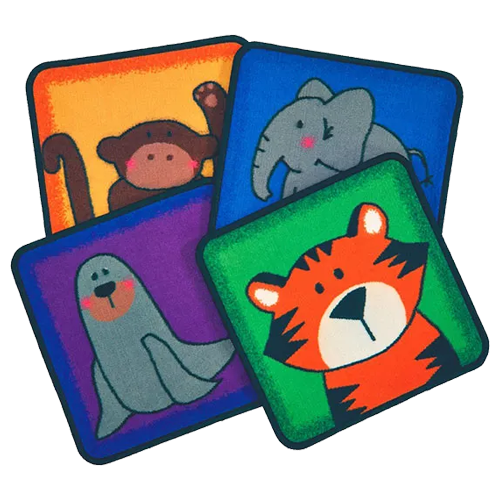
For independent reading, partner work, or early finisher activities, individual seating rugs/squares help students spread out appropriately—especially in grades K–2 where personal space is still developing.

Teacher tip: Use rug squares as flexible seating “tickets”—students choose a square, then return it to the storage spot when done.

Zoo-themed seating squares for independent reading and quiet work zones.Zoo-themed seating squares for independent reading and quiet work zones.

5) Build a calmer classroom feel (and reduce noise) with soft zones

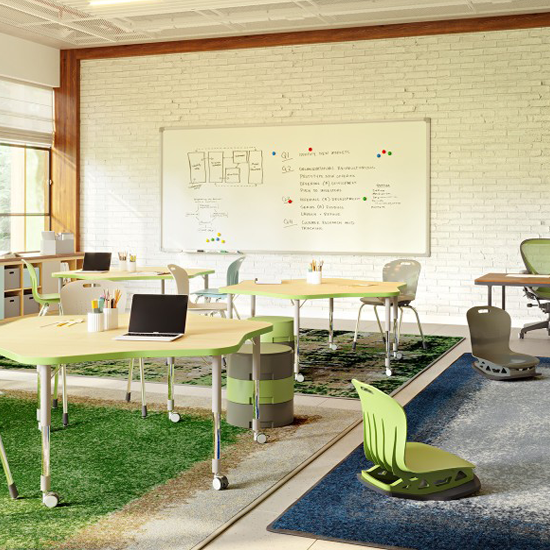
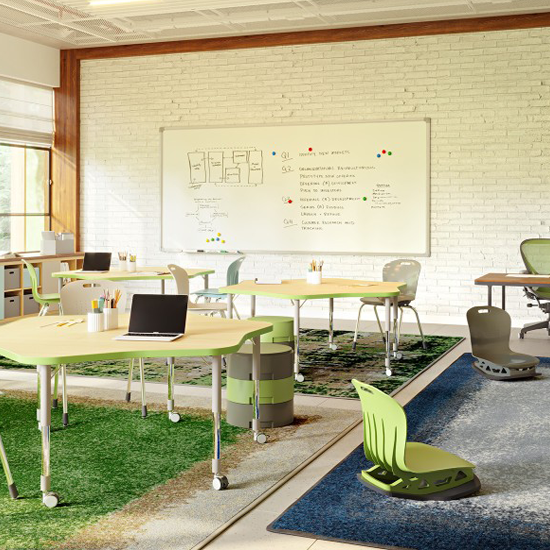
Rugs can make a classroom feel more welcoming and help absorb sound—especially helpful in high-energy elementary rooms and shared spaces.

Try placing rugs where students naturally cluster:

  • classroom library / reading nook
  • writing center
  • STEM / maker tubs
  • listening center
Textured neutral classroom rug anchoring a small-group learning space.Textured neutral classroom rug anchoring a small-group learning space.

6) Teach personal space (and reduce crowding during transitions)

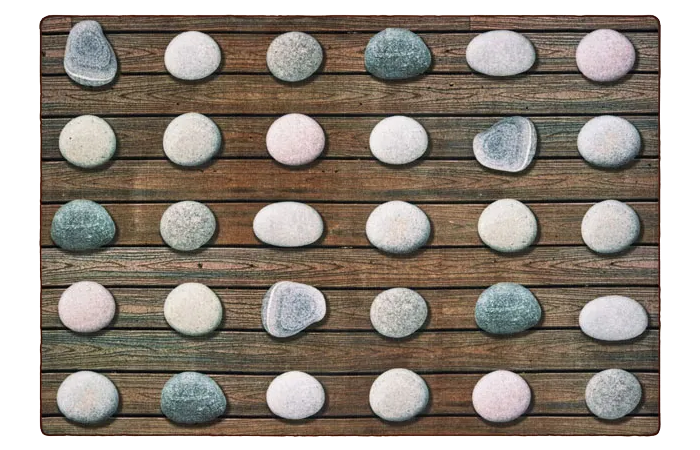
If your class gathers on the floor often, rugs with clear boundaries—dots, squares, or “stones”—help students learn spacing without constant reminders. This supports classroom management and makes line-up, circle time, and partner shares run more smoothly.

Teacher tip: Practice “seat to seat” spacing during the first weeks of school (and after long breaks). Make it a quick routine refresh.

Personal-space seating squares used for circle time in a kindergarten classroomPersonal-space seating squares used for circle time in a kindergarten classroom

7) Use color and pattern strategically (attention, wayfinding, and stations)

Color isn’t just decoration—it can help with wayfinding (“blue group meets here”), station rotation (“start on red”), and quick classroom organization. Bright rugs can energize creativity corners, while calmer palettes work well in reading or regulation zones.

Teacher tip: If students get visually overwhelmed, keep walls calmer and use rugs as the “controlled pop” of color.

Colorful classroom rug with smiley face dot seating pattern used for group activities in grades K–3Colorful classroom rug with smiley face dot seating pattern used for group activities in grades K–3

Cleaning + maintenance note (simple and realistic)

Daily reality: classroom rugs get used hard. Build a routine that’s doable:

  • Vacuum on a schedule that matches foot traffic
  • Spot-clean as needed, following manufacturer guidance
  • If you share rooms or rotate classes, label rugs by zone to make resets quicker

Final takeaway: pick rugs that “teach” with you

The best classroom learning rugs earn their spot on the floor because they help students do something: gather quickly, stay in their own space, move through routines independently, or practice skills in a visual, low-pressure way. As you choose rugs for your classroom—whether it’s one large meeting rug or a few smaller station rugs—look for designs that support the way you actually teach day to day. When a rug reinforces expectations and learning at the same time, it becomes one of those simple classroom tools you’ll use all year long.

Editor’s Note: This post was originally published in June 2023 and refreshed in January 2026 with updated teaching tips, accessibility considerations, and cleaning guidance.

Subscribe to newsletter chevron-down

Purchase Orders

For Public Schools and Government Offices.

submit a po

Large & Bulk Orders

We are happy to provide Volume Quotes for bulk furniture orders.

get a quote
wdicons/class-walet
wdicons/class-walet-mobile

We accept payment through ClassWallet

We are an approved ClassWallet vendor and you may email sales@worthingtondirect.com for a quote or submit an online quote request to get your transaction started.